

What is cholesterol granuloma?
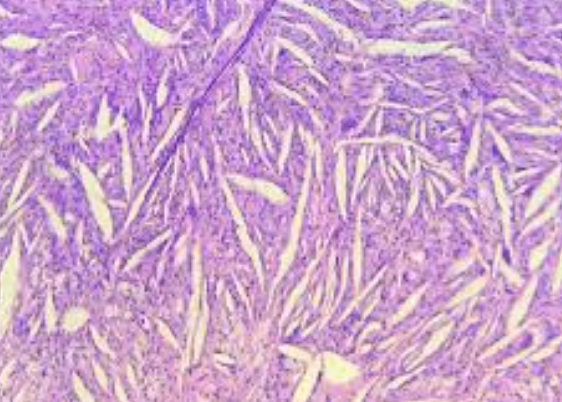 Cholesterol granuloma is a rare cyst of the temporal bone. It is filled with cholesterol and other fats. It occurs due to inflammation caused by cholesterol crystals deposited in tissues when red blood cells rupture.
How serious is cholesterol granuloma?
It is noncancerous but it may sometimes cause symptoms by compressing normal anatomical structures of the region as it grows.
Where do cholesterol granulomas occur?
They occur in the petrous apex, a portion of the temporal bone deep to the inner ear structures. This area of the skull base is deep to the ear and behind the sinuses at the junction of the bones that make up the anterior and lateral skull base.
How are cholesterol granulomas diagnosed?
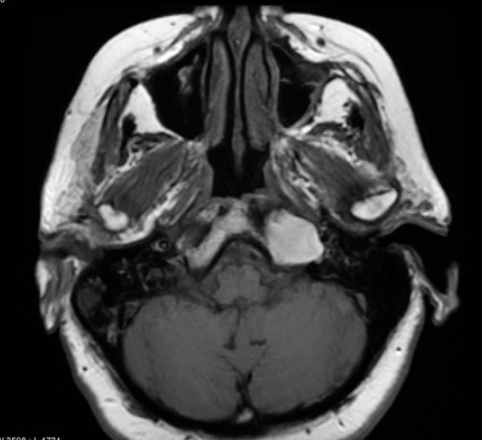 Patients typically have had an MRI of their head to diagnose the cholesterol granuloma. MRI may have been done for unrelated symptoms as many cholesterol granulomas are asymptomatic. Larger cholesterol granulomas cause symptoms such as headaches behind the eyes, double vision, facial numbness, facial pain, facial twitching, facial weakness, or hearing loss. A CT scan is also useful in both diagnosing cholesterol granulomas and also in determining the proper approach for treatment if needed.
How are cholesterol granulomas treated?
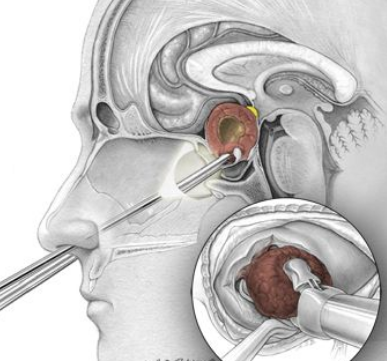 Treatment options depend on severity. In asymptomatic cases, MRI is used to check the cholesterol granuloma every 6-12 months. No further treatment may be necessary. In symptomatic cases, drainage of the cyst is the preferred method of treatment.
Access to the cyst is the key challenge to successful treatment. The least invasive corridor of access is the transsphenoidal approach. If the cyst is directly behind the sphenoid sinus, endoscopic sinus surgery can allow for the surgeon to drain the cyst through the cyst wall, into the sphenoid sinus, and out the nose.
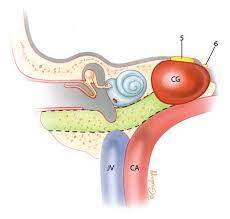 For cysts that cannot be reached through the sphenoid, the infracochlear and infralabyrinthine approaches are recommended. The surgeon will create a drainage pathway from the cyst into the mastoid or middle ear while avoiding the delicate structures of the inner ear. This may be combined with placement of a ventilating tube in the eardrum. Using these approaches the cyst can be controlled without the risks involved with complete cyst removal.
Cholesterol granuloma is a benign cyst that occasionally causes symptoms via compressive effects. It is diagnosed with CT and MRI. Many do not require any treatment. Minimally invasive drainage can often be achieved through endoscopic sinus surgery techniques. Cholesterol granuloma may also be drained through the temporal bone when necessary. Drainage of the cyst controls it, preventing further growth and relieving symptoms.